
Wind down to sleep better — Tip #19
How the 30 minutes before bed shape your entire night 😴

A few months back we talked about the importance of sleep cycles and how they shape what your body goes through while sleeping. The key insight is trying to discover how long each cycle is for you (spoiler: it’s 90 min for many healthy adults) so that you can time your sleep accordingly. If you need a refresher 👇

Sleep is one of the topics dear to most people in the audience. Many of you struggle with poor quality sleep and are actively trying to find solutions. I have been playing around with loads of variables when it comes to sleep and I can say that in my life, apart from a few stressful moments, I have always slept well 🤞. I’ll share what has worked for me, in typical Don’t Panic style: one practical tip at a time!
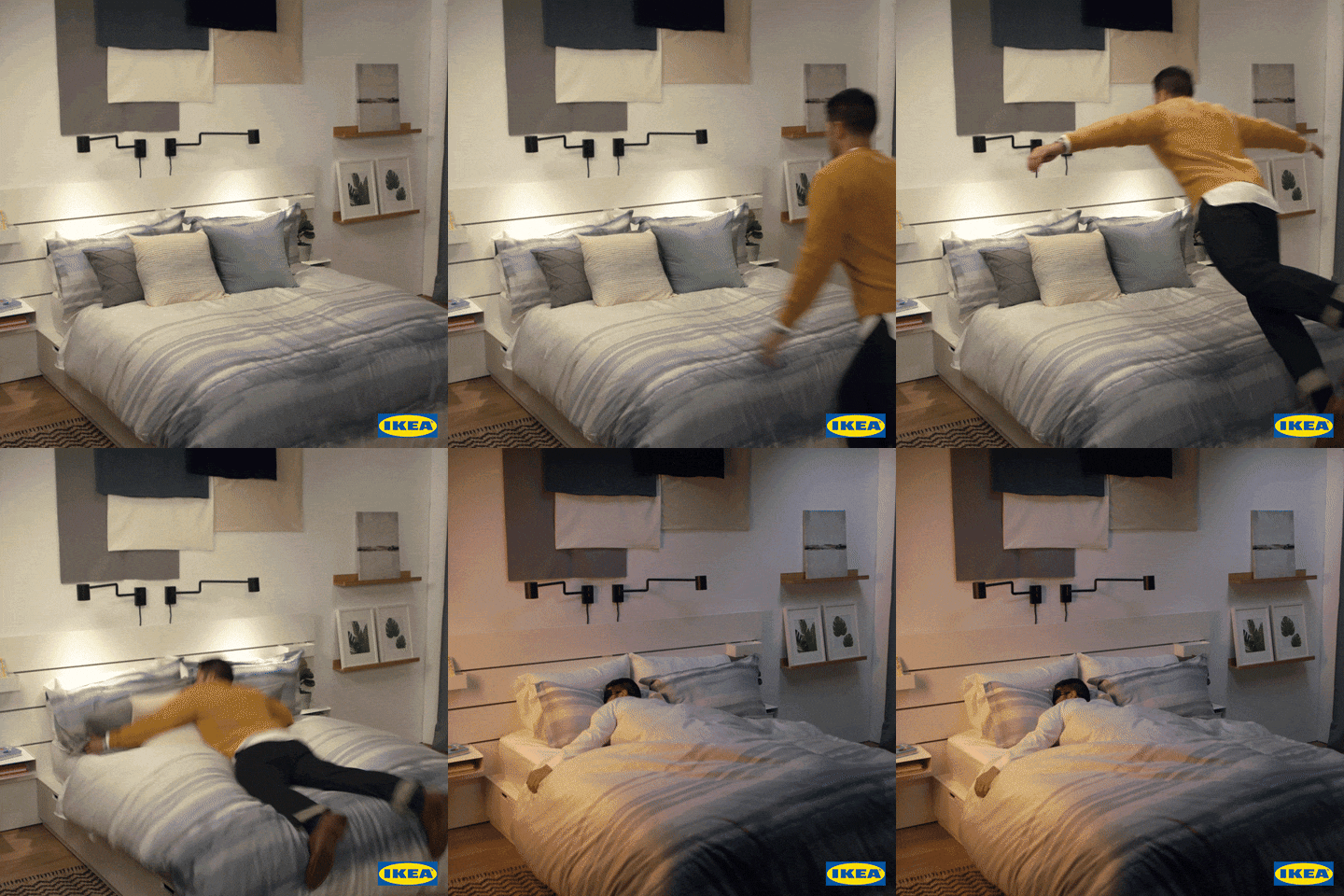
One of the best changes I have made to my routine was to introduce a 30-min buffer before going to sleep. During my first few years building my business, I remember literally shutting down the laptop and, still with a “burning” feeling in my eyes (dryness from staring at a screen for too long), going straight to brush my teeth and sleep. I thought it was efficient and responsible as I wasn’t wasting time watching some TV series I would forget about in a few weeks, but instead maximizing my time allocated to sleep.
When I started living by myself I was free to make tweaks to my environment and routine, and decided to introduce a 30/45-min gap between closing the laptop and sleeping. During this phase I mainly:
🚰 Stop drinking water
💡 Switching off most lights and/or dim them
🪥 Brush my teeth
🧖 Skincare routine
❄️ Switch on AC/cool down room temperature
📖 Read a book and/or journal
I will expand on these specific actions in the future but the most important is that the wind down:
🌚 Shift towards sleep: Gently signals your body to transition into sleep mode, making the process feel natural rather than abrupt
🥱 Melatonin release: Avoids suppressing the melatonin your brain is already naturally releasing and gives more time for its distribution
😵💫 Eye relaxation: Reduces the strain on your eyes accumulated from hours of staring at screens, helping them relax before rest
🧠 Mental decompression: Gradually quiets the mental engagement that keeps your brain wired, making it easier to let go of the day
Sometimes I am travelling or overwhelmed by work and can’t do all of the above. At least, I always make sure that I switch off any screen at least 30 minutes before sleep. When I do so I can see a significant difference in sleep quality (i.e. longer deep sleep duration), any time I don’t do it I can notice and I always tell myself “never again I am going to sacrifice my wind down routine” 🤞. Just for context, I spend ~12 hours staring at a screen throughout the day.
As some of you already know, there are loads of supplements (e.g. melatonin, magnesium etc.) to help your body fall asleep. I personally think such things should be a last resort if you have tried everything else, because we don’t really understand sleep well enough to grasp the implications of anything we introduce that affects that equilibrium.
Your weekly tip: try adding a wind-down routine. Avoid starting at a screen at least 30-min before heading to bed (yep, this includes watching TV). Even if your sleep doesn’t improve, your eyes will be thankful.
Don’t forget to send this tip to a friend that struggles with their sleep 🫰
See you next week, until then…
Don’t Panic 😱
I’ve found that I have to stop eating ~3 hours before I need to sleep. The moment I eat something, I get a burst of energy that makes it impossible to fall asleep for at least the next 2 hours.