

As I grow older, I become more and more fascinated by the concept of time. I’ve had conversations about this topic with a few friends over the past few years, especially after COVID, and many of them agreed that time seems to be moving much faster nowadays. I was curious to understand why that seems to be the case.
Our body doesn’t have one single internal stopwatch that keeps time down to the second. Time is not a sense like taste or sight, and there is no single area of the brain solely responsible for it. For daily biological timing, we rely on a sophisticated system of feedback loops known as the circadian rhythm. Its goal is to help make sure our body stays in sync with the day-night cycle, for example by producing melatonin at night to support sleep, and increasing cortisol toward the morning to help you wake up. But circadian rhythm is only one kind of biological timing, our subjective sense of time depends on attention, emotion, novelty, and memory.
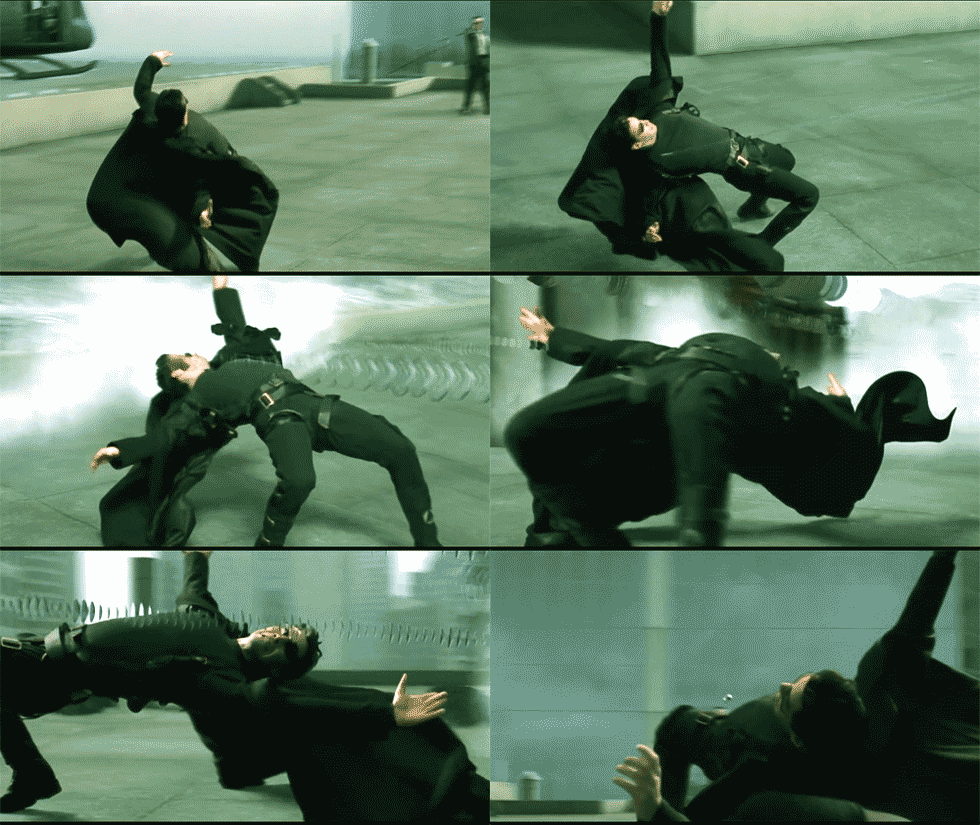
This is when I came across the oddball effect. Try watching this 14-second clip 👇
The takeaway from several studies on this subject is that our brain tends to perceive unexpected things that are new or trigger strong emotions as lasting longer than they actually do. This is common in movies: when we reach a climax, time stretches.
As we go through life, more and more things in the external world become routine. We keep seeing and experiencing the same things again and again, and we lose the novelty we used to encounter as kids, when everything was new and worth “recording”.
This topic is more nuanced, and there are other factors that influence the perception of time. I’m just simplifying in the interest of time 😜. For example, certain cultures (e.g. the Aymara) perceive the past as being in front of them because it is clearer, while the future, being uncertain, lies behind them. Certain languages also represent time in different directions.
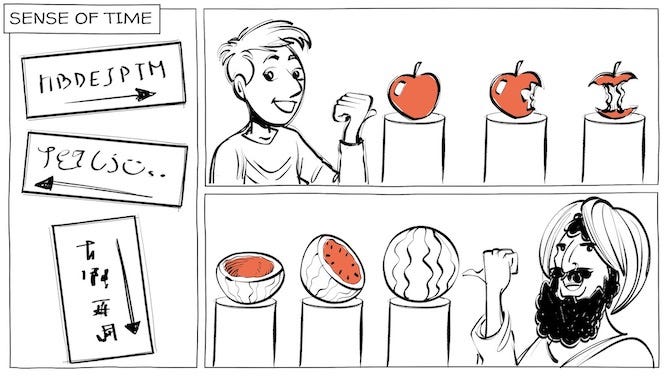
But one thing is clear: human perception of time does not match the physical passage of time. As we live, we experience time and store memories of it, so our sense of time is based on these recollections rather than on an objective system paced by seconds. This is why a holiday goes by pretty fast while you are living it, but seems much longer when you look back and recollect all the things you did and the new memories you stored, because it contained so much novelty compared to your routine.
Put your hand on a hot stove for a minute, and it seems like an hour. Sit with a pretty girl for an hour, and it seems like a minute. - attributed to Albert Einstein
Your weekly tip: time passes, but your brain perceives it subjectively. If you want to slow it down in the moment, do something boring, practice an extreme sport, or do something scary. If you want to slow it down in the long run, try new experiences, travel to a new destination, change your environment or routine, and allow your brain to form new memories that you can recollect in the future.
Don’t forget to send this tip to a friend who feels like time is flying by 🫰
See you next week, until then…
Don’t Panic 😱