
Life as a subscription — Tip #33
Are we paying more to own less?
When I was a kid, one of the main sources of entertainment was going to libraries and music stores and just roaming around in search of something I was curious to read or an album by a band I liked.
In today’s age, what I see is this 👇


This is not new. Subscriptions have been around for centuries, and the most popular one used to be the newspaper. If you think about it, it does make sense: it is delivered daily, its contents change depending on what happens in the world, and people need to make a daily effort to ensure that you receive your newspaper. It is not something you can pay once and own forever, like a music album used to be (hello Spotify 👋). The plot twist came through the digital era, when “online” businesses proved to investors and shareholders that they are way more scalable and profitable than a business that gets money once.
The gap between old business models and new ones is so wide that many “older” and physical industries are figuring out a way to introduce a subscription. When a brand like BMW tries to charge for heated car seats (then eventually reverses course), HP introduces an app to control how many pages you can print or even Amazon delivering a package turns into a subscription: it signals a desperation to tap into our money 🤑.
Why is subscription so crucial for a business?
🔁 Predictable revenue: Creates recurring income, making cash flow easier and the business more stable.
🤝 Stronger customer retention: Keeps people engaged over time instead of relying on one-time purchases.
📈 Higher lifetime value: Increases the total amount a customer is worth by extending the relationship.
🧩 Better product evolution: Encourages constant improvement based on ongoing customer feedback.
🚀 Easier growth planning: Makes it simpler to invest, hire, and scale with more confidence.
🎯 Deeper customer relationships: Turns transactions into long-term relationships, increasing loyalty and trust. It’s also harder for human beings to opt-out once they are in (due to psychological biases).
💡 More “upselling” opportunities: Opens the door to add-ons, reducing quality over time, etc.
All the above brought the World Economic Forum to create a video with the following infamous frame. A smiling man with a caption You’ll own nothing. And you’ll be happy.
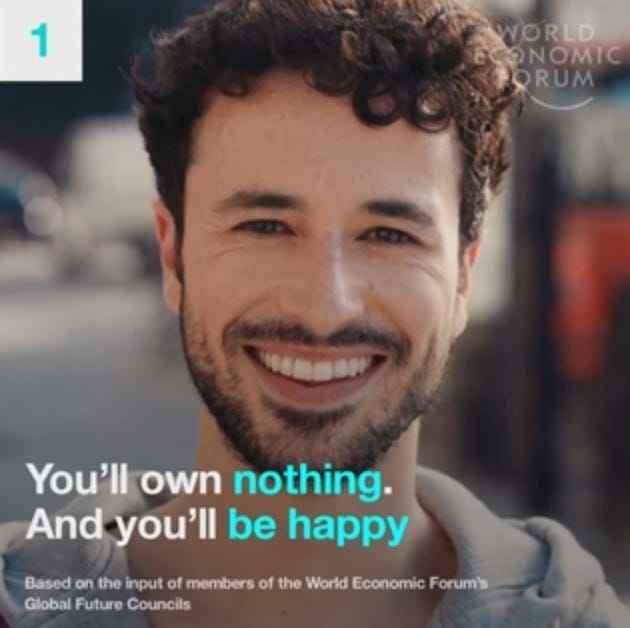
Now, I don’t know about you, but I personally don’t feel very happy that everything is turning into a recurring bill. Even when it is not the case, for example with my MacBook Pro, software updates over time make the device obsolete sooner than its actual lifetime. Even home ownership is getting out of hand, with more and more people priced out and likely never owning a home in their lifetime and instead paying a subscription called rent.
It is challenging to give tips in this context because, as consumers, we have lost are losing this battle and I cannot see the trend reversing. For software, preferring open source is one way, but it is inconvenient for non-tech folks. The only thing I can advocate for is creating awareness of where your hard-earned money is going. Because be sure of one thing: 99,9% of businesses out there have the smartest people in the world trying to figure out how to take money from your wallet.
Your weekly tip: At the of this month, audit your expenses. Check your subscriptions and recurring monthly costs. Do you really need them? Is there a fixed cost alternative? Whenever you can prefer the one-time purchase instead of a recurring one.
Don’t forget to share this tip with a friend who spends carelessly 🫰
See you next week, until then…
Don’t Panic 😱